It might seem like a straightforward question — where and how to withdraw cash from bank cards in Germany? However, there are a few key nuances here too.
The main question is: which card? A Girocard (German debit card) or a VISA/Mastercard?
Whilst the latter are more universal and offer worldwide withdrawal capabilities, Girocard has a number of small advantages of its own in Germany.
Russian cards in Germany: what works in 2026
Short answer: Russian bank cards do not work in German cash machines. This applies to all systems — Visa, Mastercard, Mir, and more recently, UnionPay.
The scheme involving UnionPay cards, which operated in 2022–2023, is no longer in effect. There are two reasons. Firstly, the largest issuer banks of such cards were hit by US sanctions in November 2024, and the Chinese payment system stopped processing their transactions outside Russia. Secondly, the banks themselves have moved UnionPay products to the archive: at the time of checking in August 2026, cards of this system from Russian issuers are either marked as archived or absent from the product range altogether.
Practical conclusion: You shouldn’t rely on withdrawing cash in Germany with a Russian card. Be sure to check the date of any instructions on this topic found online — the situation changes with every sanctions package, and materials from two years ago are no longer correct.
More details about platforms for transferring money to other countries
1. Withdrawing cash from your issuing bank’s ATMs.
Which cards: Girocard, Visa, Mastercard.
The simplest and most obvious way. Withdrawals are free of charge (although there are sometimes certain limits). Sparkasse (the equivalent of Sberbank in Russia) is by far the leader in terms of the number of ATMs. Other banks have far fewer ATMs.
Personal liability insurance (Privathaftpflichtversicherung) — cover for your liability towards third parties. Keep yourself and your family safe.
Which cards: Girocard, Visa, Mastercard.
The simplest and most obvious way. Withdrawals are free of charge (although there are sometimes certain limits). Sparkasse (the equivalent of Sberbank in Russia) is by far the leader in terms of the number of ATMs. Other banks have far fewer ATMs.

2. Free cash withdrawals at partner ATMs
Which cards: Girocard.
All banks except for savings banks have noticeably fewer ATMs, which is why they join forces in partner networks. There are around 50’000 ATMs in total in Germany, and they are distributed as follows:
| Network | Who is included | Cash machines |
|---|---|---|
| Sparkassen-Verbund | All the country’s savings banks | The largest network |
| BankCard ServiceNetz | Volksbanken and Raiffeisenbanken, Sparda-Banken, PSD-Banken | about 14’000 |
| Cash Group | Deutsche Bank, Postbank, Commerzbank, HypoVereinsbank and their subsidiary banks | more than 4’500 |
| CashPool | Targobank, Santander, all Sparda-Banks, OLB, National-Bank, Merkur Privatbank and a number of private banks | about 2’800 |
Please note that CashPool continues to operate; information about its closure found online is incorrect. The current ATM locator can be found on the cash-pool.de website; the former address in the .mobi domain no longer opens.
3. Free cash withdrawals in shops
Which cards: Girocard. Maximum per transaction — 200 €, free of charge, right at the checkout.
The rules have changed: for some chains, the minimum purchase amount has disappeared altogether.
| Network | Minimum purchase |
|---|---|
| dm, Müller, REWE, tegut | from the first item — there is no minimum |
| ALDI Nord, Lidl | 1 € |
| ALDI Süd, toom Baumarkt, NORMA, HIT | 5 € |
| Kaufland, Netto Marken-Discount, Rossmann, PENNY, V-Markt | 10 € |
| EDEKA, denns organic supermarket | 20 € |
Disclaimer: not all stores in the chain are participating – for example, far from every EDEKA store. Look for the cash-back sticker at the checkout.
4. Fee-based cash withdrawals at other banks’ ATMs
If there is no cash machine from your network nearby, you can withdraw money from any other — but with the ATM operator’s fee (Fremdentgelt). It does not depend on your bank and is set by the owner of the device.
Your protection is simple and always works. The law obliges the operator to show the full amount of the commission on the screen before cash is dispensed, and also to state it on the receipt. And most importantly: you have to pay the fee only if its full amount was declared before the start of the operation. If a dispute arises, the burden of proving that you were informed lies with the bank, not you.
Therefore, there is one rule: if you see an amount on the screen, make a decision. If you are not happy with it, press “Cancel”, and no charges will be made. Be particularly careful with cash machines in tourist areas, at train stations and at airports: fees there are the highest.
Withdrawals abroad: the main trap
Outside the eurozone, the ATM will offer “convenient” conversion directly into euros. This is always unprofitable: The exchange rate is set by the ATM operator, and it is usually 3–12 % less favourable than the bank’s rate.
Always choose the option “without conversion” and withdraw in the local currency — your bank will do the conversion at a much fairer rate. Under EU rules, the markup on the official exchange rate must be disclosed as a percentage before the transaction, so you can compare the options right on the screen.
While we are on the subject of trips outside the eurozone, there are bigger costs to think about than the ATM fee. Your Krankenkasse (statutory health insurance) does not pay for treatment in countries without a social security agreement, such as the USA or Thailand. In the EU it pays only what local patients are entitled to, and it never pays for medical repatriation. An Auslandsreisekrankenversicherung (travel health insurance) closes these gaps, either for a single trip or for a whole year. I explain how the policies differ on the page about travel insurance (Reiseversicherung). If you are not sure what your current insurance covers, we can check that in a consultation.
The ATM debited the money but didn’t dispense it
The situation is unpleasant but fixable — the law is on your side here.
- Record the location, time and ATM number, keep the receipt or note that there was no receipt.
- Immediately contact your bank in writing. It is your bank, rather than the ATM operator, that is obliged to investigate.
- The bank is requesting a cassette reconciliation from the operator: if the discrepancy is confirmed, the money will be refunded.
- If a transaction is unfulfilled, the law requires the amount to be refunded immediately; in the case of unauthorised transactions — no later than the end of the next working day after you report it.
- The burden of proving that the transaction went through correctly and without a malfunction lies with the bank, and not you.
Deadline for your claim — 13 months from the date of the debit, but it’s not worth delaying: the fresher the incident, the easier the reconciliation.
Safety at ATMs
| Scam | What does it look like |
|---|---|
| Skimming | The card slot skimmer copies the magnetic stripe, and the PIN is captured by a camera or by shoulder surfing. The good news is that a copy of the magnetic stripe can be used today only at certain ATMs outside Europe — in Europe the chip blocks this |
| Card-Trapping | The ATM “swallows” the card and won’t give it back, the PIN is captured on camera. Never leave the ATM if your card gets stuck — call the bank immediately |
| Cash-Trapping | A false strip on the dispenser is holding back the notes. The money doesn’t come out, you walk away, and it gets stolen. |
| Interrupted transaction | The scammer aborts the transaction at the exact moment the cash is ready to be dispensed. |
| External device in the ATM itself | A rare, but existing scheme involving the connection of equipment to the device |
Simple rules
- Cover your keyboard with your hand when entering your PIN — always, even if no one is around.
- Check the card slot and keypad overlay: if anything feels loose or looks stuck on, do not use the machine.
- Never accept “help” from strangers at an ATM.
- Don’t move away until you have the card and the money.
- If a card is lost or stolen, block it by calling the single number 116-116, 24/7; from abroad +49-116-116. Then be sure to file a report with the police.
- A bank, a public authority or a reputable company will never ask for a PIN, TAN or password — neither by phone nor in writing.
Are shops obliged to accept cash
Euro banknotes are the only unlimited legal tender in Germany. But this does not create obligations for the shop: freedom of contract applies, and a business may announce “cards only” in advance. If such a notice is displayed at the entrance or at the till, there is no point arguing.
| Is there a cash payment limit? | Currently there is no limit in Germany. The pan-European limit of €10,000 will begin to apply from 10th July 2027 |
| What is already in effect today | Not a ban, but an obligation of identification: in the case of cash payment from €10,000 the seller is obliged to verify your identity. For precious metals (gold, silver, platinum) the threshold is lower — from €2,000 |
Sparkasse: where withdrawals are free and what another bank’s ATM costs
Sparkasse has the largest ATM network in the country. The group itself names around 20’000 of its own machines, where Sparkasse customers withdraw cash free of charge. The card works at roughly 50’000 ATMs across Germany, but outside its own network withdrawals cost money.
There is no single fee, and that is the key point. The price is set not by your bank but by the operator of the machine, so it differs from provider to provider. In return, one rule applies: the ATM must show the amount on screen before you confirm. If you do not like the price, cancel — nothing is charged.
A trap of its own are ATMs that belong to no bank: in supermarkets, at stations, in tourist spots. Their fee is usually the highest, and the screen will also offer you a “favourable rate” — always decline it, see the section on withdrawing abroad.
Sparkasse does not publish a daily limit: it is individual and set out in your contract. You can check it and change it with your adviser or in online banking.
Each Sparkasse sets its own withdrawal limit — legally they are independent banks, and there is no nationwide rule. For orientation: Sparkasse Hannover allows up to €2,000 a day at its own ATMs, €500 or €1,000 at other banks’ machines and €500 a day abroad.
At a Sparkasse ATM the sequence is as follows. The card goes into the slot chip first; the screen shows “Geheimzahl eingeben” — the four-digit PIN, confirmed with the green key. Next comes “Betrag wählen”: the machine offers fixed amounts, and “anderer Betrag” opens a free entry field. Some machines also ask for the “Stückelung” — which notes you want — and for a “Beleg” or “Quittung”, the receipt. At most German ATMs the card is returned first and the cash only afterwards: that is deliberate, so the card is not left in the slot.
Three wrong PIN entries in a row and the machine keeps the card, while the bank blocks it. The card can be unblocked at your own branch with an ID document, and the PIN stays the same. If it happened at another bank’s machine, the card is first forwarded to your Sparkasse, which takes several days. So it is better not to test your memory for the PIN while travelling.
Sparkasse belongs to none of the three other German ATM alliances, which is exactly why withdrawing there costs a Sparkasse customer money:
- Cash Group — Deutsche Bank, Commerzbank, HypoVereinsbank (UniCredit), Postbank and their subsidiaries;
- CashPool — Targobank, Santander, OLB, the co-operative Sparda-Banken and a number of private banks;
- BankCard-ServiceNetz — Volksbanken and Raiffeisenbanken.
According to Stiftung Warentest, a withdrawal at another bank’s ATM costs €1.95–6 per transaction — this is the fee charged by the machine’s operator. Your own bank may add a fee of its own on top: check its price list.
Can you withdraw money with someone else’s card
Formally, no. The German girocard is issued to one name, and only that person may use it. Handing the card over together with the PIN breaches the terms of every German bank.
The practical consequence matters more than the formal ban. If too much is withdrawn with such a card, or it is lost, the bank may refuse to reimburse: passing on the PIN counts as gross negligence by the cardholder. The risk stays entirely with the account holder.
There are two lawful ways to give another person access to the money:
- Kontovollmacht — a power of attorney over the account. It is set up in the branch; the authorised person gets their own card and access to the agreed extent.
- An additional card on a joint account — the usual route for spouses with a Gemeinschaftskonto.
For one-off help to a relative, a normal transfer to their account is simpler — they can then withdraw the money with their own card.
Wallet stolen: what to do in the first minutes
Withdrawing cash is the moment when your card and wallet are out in the open. If they do get stolen, this is the order.
- Call the central blocking number 116-116. It is available around the clock and blocks the cards of participating institutions. From a German landline the call is free; from a mobile network and from abroad the cost depends on your provider, and from abroad you dial the number with the German country code.
- Inform your own bank. The central number only blocks the card — issuing a new one and sorting out disputed debits is something only the bank can do.
- File a police report. The bank needs it when clarifying debits — and so does the insurer if keys belonging to someone else were in the wallet.
What you actually get back. Card debits are the bank’s responsibility: under § 675u BGB unauthorised payments are refunded, and the cardholder’s own share up to the blocking notice is capped at €50 (§ 675v BGB). That share disappears entirely if the bank did not require strong customer authentication. With gross negligence, however, for example when the PIN was kept next to the card, the €50 cap does not apply and the holder bears the full loss up to the blocking notice. After the blocking notice the cardholder is no longer liable at all.
The cash itself, the wallet and the documents are not reimbursed by the bank — that is already the domain of home contents insurance (Hausratversicherung), and one detail matters here. Robbery involving force or threat (Raub) is part of the basic cover and applies away from home as well. Simple theft without force (einfacher Diebstahl, Taschendiebstahl), by contrast, only comes as an add-on module: it is far from standard in every policy, the payout is usually capped at €500–1,000, and valuables and electronic devices are normally excluded. A police report is mandatory here — without one the insurer does not pay, which is another reason not to skip the third step.
Keys in a stolen wallet are the most expensive part
Blocking the card is free, but the keys turn into real money. If the building has a central locking system (Schließanlage), it is not a single cylinder that gets replaced but the entire system, and the bill runs into thousands of euros. Whoever lost the key pays.
This is exactly the case covered by private liability insurance (Privathaftpflichtversicherung): the loss of someone else’s keys – office keys, the keys to a rented flat or to the house – is included in most modern policies. Check the key-loss cover limit in your specific contract, but the policy itself costs incomparably less than replacing an entire locking system.
Frequently asked questions
How do you withdraw money at Sparkasse?
With your own card at any of the roughly 20’000 Sparkasse ATMs — free of charge. Insert the card, enter the PIN, choose the amount. The card also works at other banks’ ATMs, but a fee applies, and the machine shows it on screen before you confirm.
How much does it cost to withdraw cash at another bank’s ATM?
There is no single price: the fee is set by the operator of the machine, not by your bank. It is usually highest at machines outside the banking networks — in supermarkets, at stations, in tourist spots. The amount is always shown on screen before you confirm, and you can cancel.
Can you withdraw money with someone else’s card?
No. The card is issued to one name; passing it on together with the PIN is prohibited by the bank terms, and in a disputed transaction the bank may refuse to reimburse. The lawful routes are a Kontovollmacht or an additional card on a joint account.
How much can you withdraw at once?
The daily limit is individual: it is set out in the contract and depends on the bank and the account type. There is no single figure for everyone. You can check it and raise it if needed in online banking or with your adviser.
Can you get cash in a shop?
Yes, many chains hand out cash at the till when you shop. Conditions and amounts differ by chain — details are in the section on free withdrawals in shops above.
What should you do if the ATM doesn’t dispense the money?
Do not leave the ATM, note the time and the address, call your bank immediately and file a claim. The exact procedure is described in detail in the section above.
What should I do if my card is stolen?
Call 116-116 immediately to block the card, then inform your own bank and file a police report. If the keys to your flat or office disappeared together with the wallet, private liability insurance (Privathaftpflichtversicherung) may cover replacing the locking system.
What else to read on finber.de
- Current account in Germany — which bank to choose and what fees to look out for
- Credit cards in Germany — what is the difference between a girocard, a debit card and a credit card
- Useful telephone numbers in Germany — single card-blocking number and other emergency lines
- Internet in Germany — another topic where commissions are hidden in the small print
Sources
Data checked against primary sources on 19 Aug 2026; the section on Sparkasse and wallet theft was extended on 6 Sep 2026:
- Official websites of the Cash Group, CashPool and BankCard-ServiceNetz ATM alliances; bank data on machine numbers and limits; Stiftung Warentest — the fee range at other banks’ ATMs
- girocard.eu (EURO Kartensysteme) — card co-brands and Maestro status
- BGB § 675d, § 675u, § 675v, § 675w, § 675y, § 676b and EGBGB Art. 248 §§ 17, 17a, 18 — fee disclosure and refunds
- EU Regulation 924/2009 as amended by 2019/518 — disclosure of currency conversion charges relative to the ECB rate
- BBankG § 14 — status of cash; GwG § 10 — identification for large cash transactions; EU Regulation 2024/1624 — cash limit from 10/07/2027
- kartensicherheit.de (EURO Kartensysteme) — description of ATM fraud schemes
- sparkasse.de — card blocking after three wrong PIN entries and the unblocking procedure; the terms of individual Sparkassen — daily withdrawal limits
- Insurers’ Hausratversicherung terms — Raub in the basic cover, einfacher Diebstahl (Taschendiebstahl) as an add-on module and its limits
- US Treasury sanctions lists from 21/11/2024 and Russian bank websites — UnionPay card status
Limits, fees and ATM network compositions change. Check the conditions for your card in the bank’s price list.
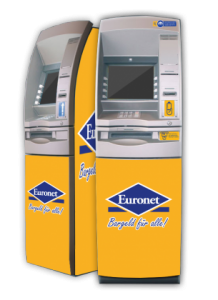
Also worth a mention are the private cash machines of Euronet or Cashpoint (commonly found at airports, railway stations and shopping centres).
These ATMs are not tied to a specific bank and always charge a fixed fee (often higher than at bank ATMs) for any transaction, including a balance check. It is recommended to use them only as a last resort.
Any questions? Write to us and we will reply in detail.




-
Mahnverfahren: how to recover a debt in Germany without a lawsuit or a court hearing
-
Deutsche Bahn Familienticket for 99,99 € is now permanent: conditions and catches
-
What changes in Germany in October 2026
-
Dental insurance before the year ends: when the “short first year” really works
-
Methods of earning pension points — Entgeltpunkte